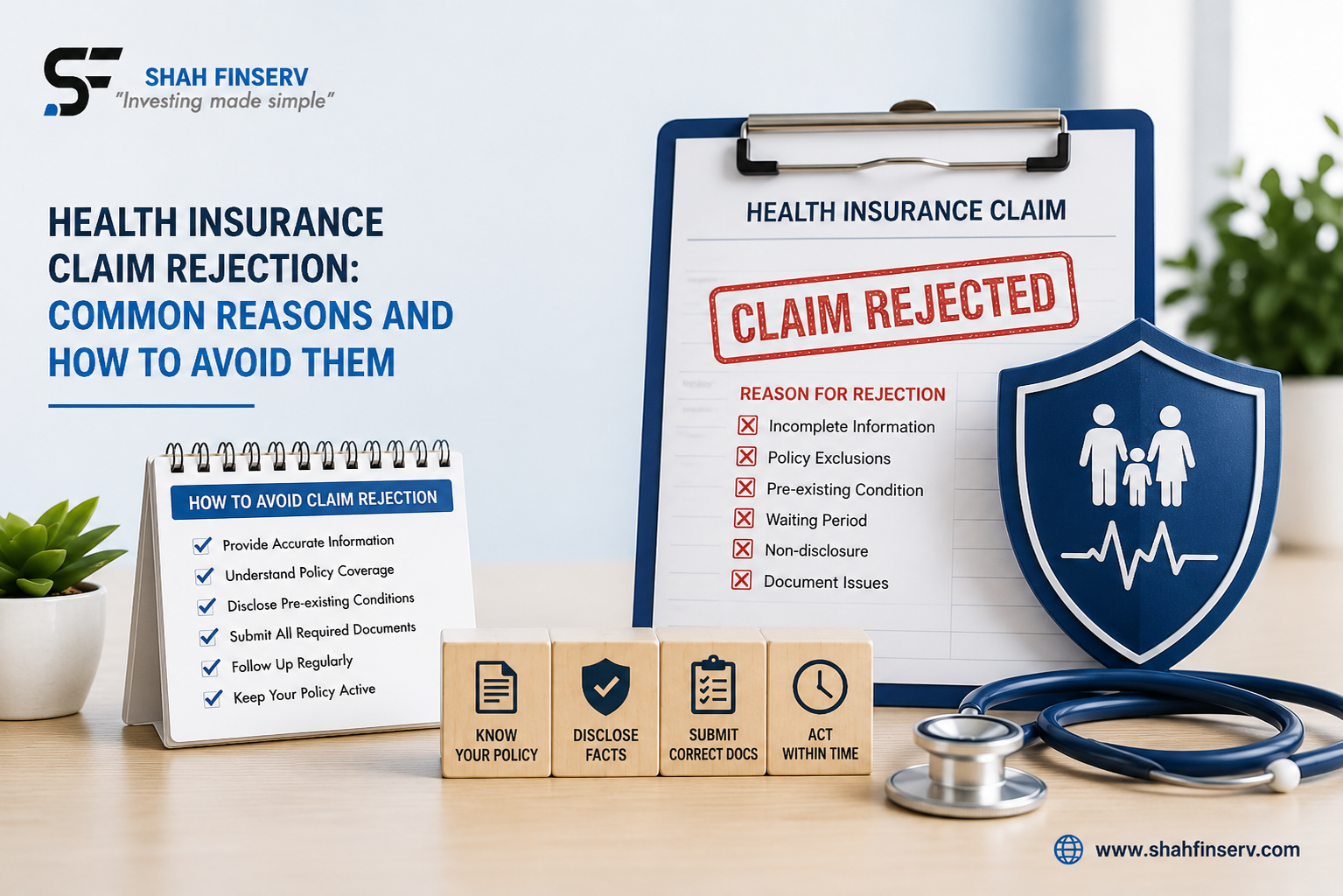

Purchasing health insurance is one of the most effective ways to protect yourself and your family from unexpected medical expenses. However, receiving a health insurance claim rejection after hospitalization can be frustrating, especially when you expect your policy to cover eligible treatment costs. In many cases, claims are rejected not because the insurer is unwilling to pay, but because of documentation errors, policy limitations, or failure to comply with policy requirements.
Understanding the health insurance claim rejection reasons can help policyholders avoid unnecessary disputes and improve the chances of successful health insurance claim settlement. Whether you opt for cashless hospitalization at a network hospital or submit a reimbursement claim, knowing the correct medical insurance claim process is essential.
With expert guidance from Shah Finserv, individuals and families can better understand policy coverage, complete the required documentation, and receive professional assistance throughout the claims process.
What is Health Insurance Claim Rejection?
A health insurance claim rejection occurs when an insurance company declines to pay either part or all of a medical claim submitted by the policyholder or hospital. Rejection may happen during a cashless request or after submitting a reimbursement claim.
Claims are evaluated based on the policy's coverage, eligibility, policy terms and conditions, submitted documents, and compliance with insurer guidelines. If any requirement is not met, the insurer may reject the claim.
Understanding the health insurance claim rejection process helps policyholders identify issues early and take corrective action where possible.
How Does the Medical Insurance Claim Process Work?
The medical insurance claim process generally follows these steps:
-
Inform the insurer or TPA in health insurance before or immediately after hospitalization.
-
Choose a network hospital for cashless treatment whenever possible.
-
Submit all required documents and medical records.
-
The insurer reviews eligibility, policy coverage, and treatment details.
-
The claim is approved, partially approved, or rejected.
-
If rejected, the insurer provides reasons for the decision.
For reimbursement claims, the insured first pays the hospital bill and later submits documents for reimbursement.
Understanding every step reduces the possibility of health insurance claim rejection.
Common Reasons for Health Insurance Claim Rejection
Several factors contribute to why health insurance claims get rejected. Understanding these reasons can help policyholders avoid common mistakes.
Incomplete Claim Documentation
One of the most frequent health insurance claim rejection reasons is missing or incorrect paperwork.
Common health insurance claim documents required include:
-
Health insurance policy copy
-
Hospital discharge summary
-
Original hospital bills
-
Medical prescriptions
-
Diagnostic reports
-
Pharmacy bills
-
Identity proof
-
Cancelled cheque for reimbursement claims
Incomplete claim documentation often delays or leads to rejection.
Non-Disclosure of Medical History
Failure to disclose existing illnesses while purchasing a policy can result in pre-existing disease claim rejection.
Insurance companies assess health risks based on the information provided during policy issuance. Any material non-disclosure may affect claim eligibility.
Always provide complete and accurate medical information when purchasing or renewing your policy.
Waiting Period Restrictions
Every policy includes a waiting period in health insurance for specific illnesses, maternity benefits, and pre-existing diseases.
If treatment is taken before the applicable waiting period ends, the insurer may reject the claim even if the policy is active.
Reading the policy carefully helps avoid misunderstandings regarding waiting periods.
Treatment Not Covered Under the Policy
Many claims are rejected because the treatment falls under health insurance exclusions.
Common exclusions may include:
-
Cosmetic procedures
-
Experimental treatments
-
Self-inflicted injuries
-
Certain dental treatments
-
Fertility procedures
-
Non-medically necessary hospitalization
Reviewing policy exclusions before treatment can help avoid unexpected claim denials.
Failure to Follow Policy Terms and Conditions
Every health insurance policy contains specific policy terms and conditions regarding hospitalization, claim notification timelines, documentation, and treatment eligibility.
Ignoring these requirements can result in a rejected claim.
Delayed Claim Intimation
Many insurers require timely notification for planned and emergency hospitalization.
Late notification may become one of the important reasons for health insurance claim rejection, particularly for cashless approvals.
Cashless Hospitalization at a Non-Network Hospital
Cashless hospitalization is generally available only at a network hospital associated with the insurer.
If treatment is taken at a non-network hospital without following the reimbursement procedure, the cashless request may be declined.
These are among the most common cashless claim rejection reasons.
Errors in Reimbursement Claims
Several reimbursement claim rejection reasons involve:
-
Missing original bills
-
Incorrect claim forms
-
Illegible documents
-
Missing prescriptions
-
Delay in submission
Carefully verifying every document before submission improves claim success.
Key Features and Benefits of Understanding Claim Rejections
Knowing the causes of health insurance claim rejection offers several advantages.
-
Better awareness of policy coverage
-
Improved claim approval rates
-
Faster documentation process
-
Reduced financial stress during hospitalization
-
Better communication with insurers and TPAs
-
More informed healthcare decisions
Professional advisors like Shah Finserv also help policyholders understand policy conditions before purchasing insurance, reducing future complications.
How to Avoid Health Insurance Claim Rejection
Preventing claim rejection starts long before hospitalization.
Read Your Policy Carefully
Understand:
-
Coverage limits
-
Waiting periods
-
Co-payment clauses
-
Room rent limits
-
Exclusions
-
Claim procedures
Maintain Proper Documentation
Keep all medical records organized.
Verify that every document required for the claim is complete before submission.
Choose a Network Hospital
Whenever possible, select a network hospital for planned treatment.
This simplifies cashless hospitalization and reduces paperwork.
Inform the Insurer Promptly
Notify the insurer or TPA in health insurance as soon as hospitalization is planned or in emergencies according to policy guidelines.
Disclose Complete Medical Information
Honest disclosure during policy purchase reduces the risk of pre-existing disease claim rejection later.
Seek Professional Claim Assistance
Many policyholders benefit from expert claim guidance.
Those looking for health insurance claim support in Valsad, health insurance consultant in Vapi, or health insurance claim assistance in Vapi can consult experienced professionals at Shah Finserv for assistance with documentation, policy interpretation, and claim coordination.
Applications Across Different Health Insurance Claims
Understanding claim procedures benefits various situations:
-
Planned surgeries
-
Emergency hospitalization
-
Day-care treatments
-
Critical illness claims
-
Family floater policies
-
Senior citizen health insurance
-
Corporate health insurance policies
Regardless of the treatment type, following the correct claim process significantly improves approval chances.
Common Health Insurance Claim Mistakes to Avoid
Many policyholders unintentionally make mistakes that increase the likelihood of health insurance claim rejection.
Avoid these common errors:
-
Ignoring policy exclusions
-
Not reading policy terms
-
Missing claim deadlines
-
Choosing non-network hospitals without understanding procedures
-
Submitting incomplete documentation
-
Hiding pre-existing medical conditions
-
Losing original medical bills
-
Assuming every treatment is covered
Avoiding these common health insurance claim mistakes improves the likelihood of successful claim settlement.
Why Policyholders Prefer Professional Claim Guidance
Health insurance policies often contain detailed clauses that may be difficult for policyholders to interpret.
Professional consultants help by:
-
Explaining policy coverage
-
Reviewing claim documents
-
Coordinating with insurers
-
Guiding reimbursement procedures
-
Supporting dispute resolution
-
Assisting during claim follow-ups
Working with experienced advisors such as Shah Finserv can simplify the entire claim journey and help policyholders make informed decisions.
What to Do if Your Health Insurance Claim is Rejected
A rejected claim does not always mean the process has ended.
You may:
-
Review the insurer's rejection letter.
-
Verify whether additional documents can resolve the issue.
-
Request clarification from the insurer.
-
Contact the TPA in health insurance if applicable.
-
File a complaint through the IRDAI grievance process if necessary.
-
Approach the insurance ombudsman when the dispute remains unresolved and meets eligibility requirements.
Understanding the available grievance mechanisms helps policyholders pursue legitimate claims effectively.
Before purchasing a policy, reviewing the insurer's claim settlement ratio can also provide insight into its historical claim settlement performance, although it should not be the only factor considered.
Why Choose Shah Finserv?
Choosing the right insurance advisor is just as important as choosing the right policy.
-
Extensive experience in health insurance advisory
-
Assistance in selecting suitable policies
-
Guidance on policy terms and conditions
-
Support for claim documentation
-
Help with reimbursement and cashless claims
-
Customer-focused insurance consultation
-
Reliable assistance throughout the policy lifecycle
By helping clients understand policy features before purchase and assisting during claims, Shah Finserv aims to simplify the health insurance experience with practical guidance and dependable support.
Conclusion
A health insurance claim rejection can often be prevented by understanding your policy, maintaining accurate documentation, following insurer guidelines, and selecting appropriate healthcare facilities. Whether filing a cashless or reimbursement claim, attention to detail plays a significant role in successful claim settlement.
Understanding the medical insurance claim process, avoiding common mistakes, and seeking expert guidance when needed can reduce delays and improve claim outcomes. With knowledgeable support from Shah Finserv, policyholders can make informed insurance decisions and navigate the claims process with greater confidence.